Storytelling, The Universal Language | What Bad Bunny's Super Bowl Performance Reminded Me

If you lean in close enough, you can see him. A man standing at the only window in a narrow concrete cell on Robben Island. The window is small, barely generous enough to let in light, barely merciful enough to tell him whether the sun is rising or falling.
Beyond it: water. Endless, salted blue. He can taste the ocean in the air, though he cannot touch it. The prison sits surrounded by nothing but water, as if isolation itself were a geography.
Inside, the walls are coated in chipped paint. Faded blue clings to concrete like memory clings to the body. Perhaps he runs his fingers across it sometimes, tracing color as proof that something softer once existed.
There is a small table, just enough space for a few books. There is a cot in the corner with the thinnest bedding imaginable. The room does not offer comfort. It offers endurance.
For 27 years, that cell held a man named Nelson Mandela.
Twenty-seven years of confinement. Twenty-seven years of listening to waves he could not wade into. Twenty-seven years of holding a story about freedom when the present moment gave him no evidence that freedom was coming.
And yet, in 1994, that same man became President of South Africa, leading the dismantling of apartheid and reshaping what the world understands about reconciliation and moral courage. His leadership was not born in comfort. It was forged in narrative.
He refused to let prison rewrite who he was. Instead, he kept rewriting the story of his country.
Now travel 4,500 nautical miles west.
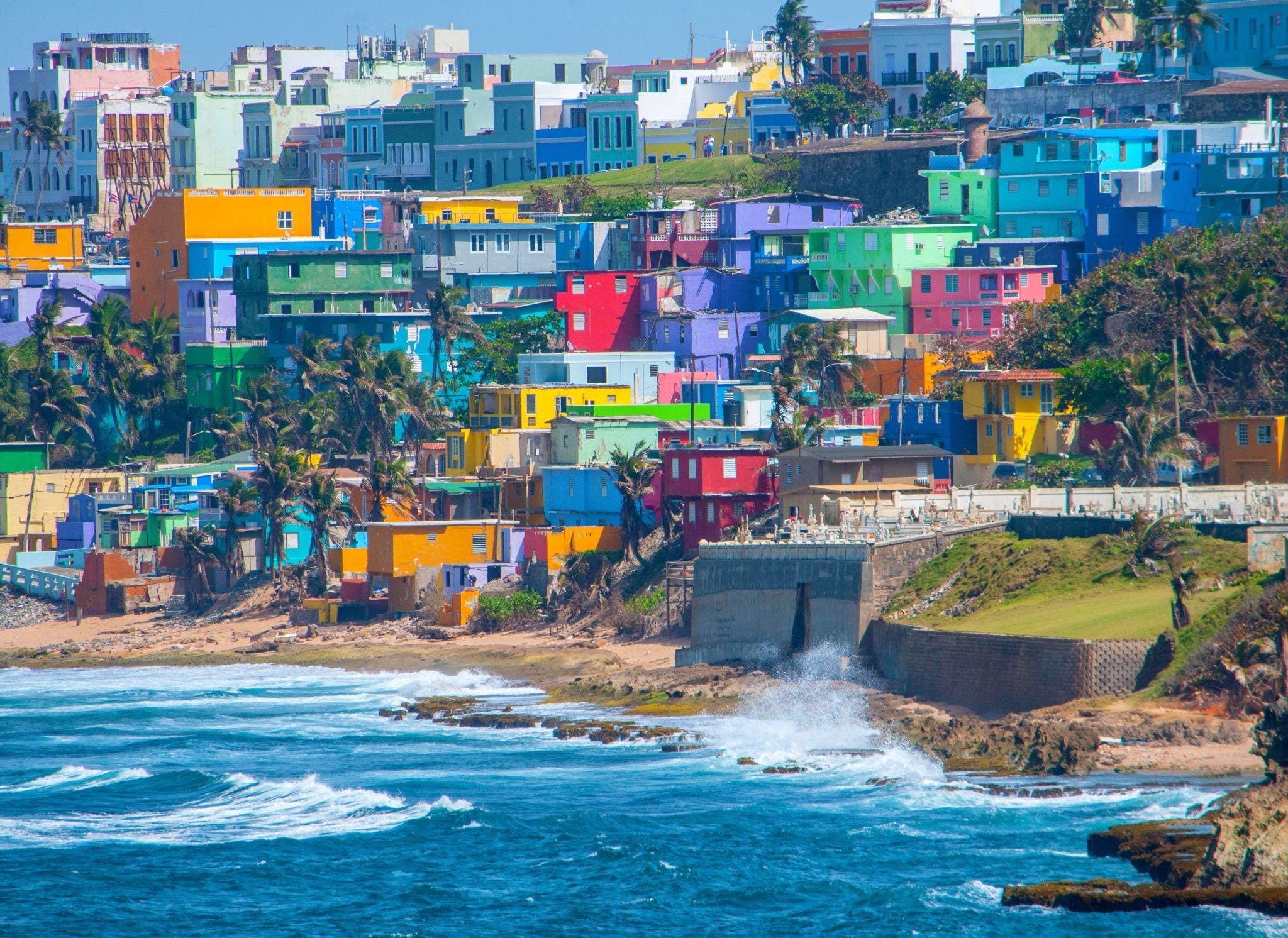
Across the Atlantic, in Puerto Rico, another story was beginning. Colonialism had also weathered this land, shaping its politics, its economics, its sense of belonging. In 1994, the very year Mandela stepped into the presidency, a child named Bad Bunny was born: Benito Antonio Martínez Ocasio.
He grew up speaking Spanish. Walking past neighborhood shops. Absorbing rhythm from the streets. Getting into mischief like any curious child who knows the world is larger than the block he stands on.
Nothing about his childhood cell looked like Mandela’s. But both were born into systems that told them who they were supposed to be.
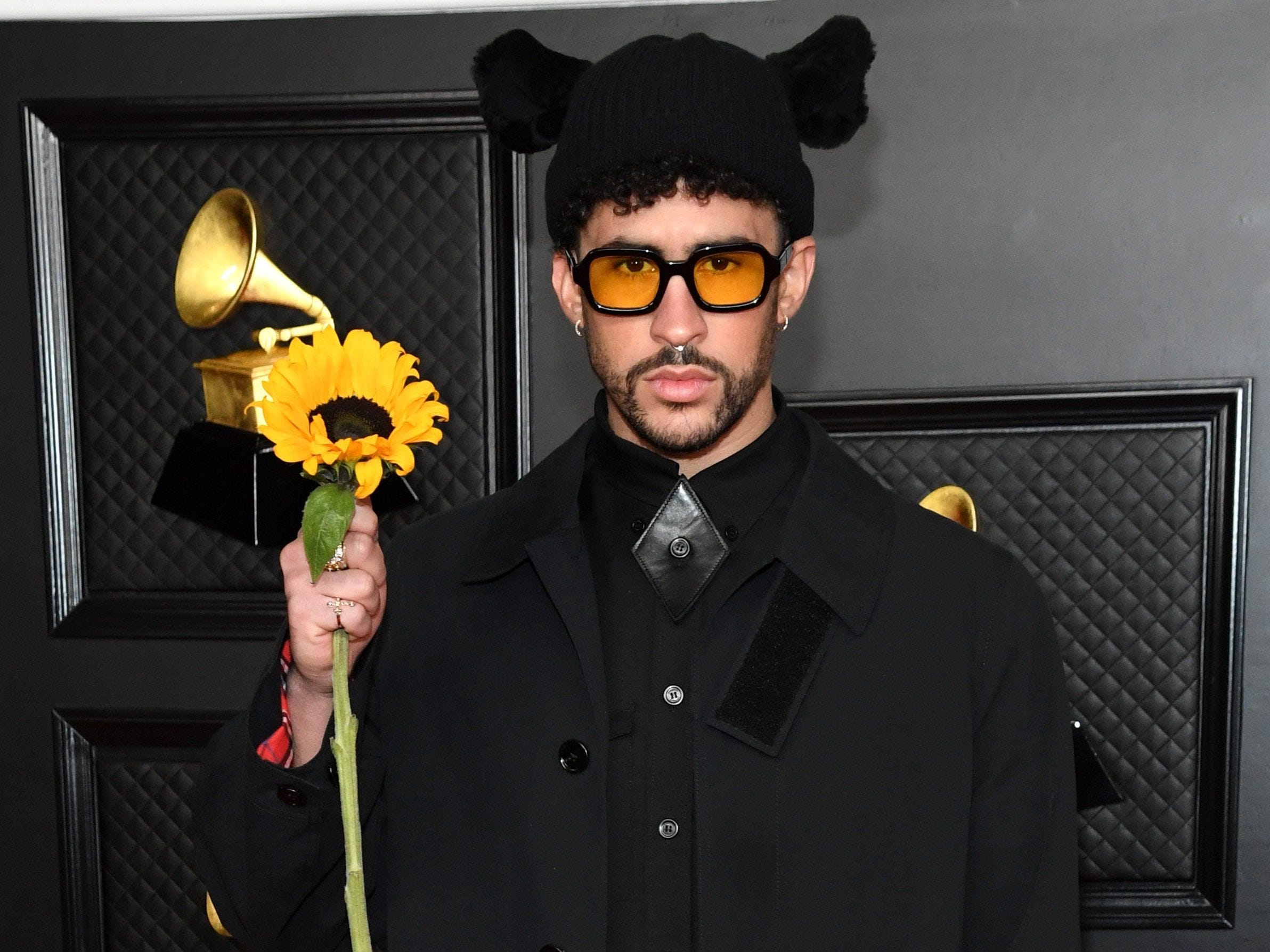
At 27 years old, the same number of years Mandela spent in prison, Bad Bunny won his first Grammy. Dressed in an all-black custom Burberry suit, topped with a hat crowned by cropped bunny ears, he stood at a microphone and accepted an award the world once said would not belong to a Spanish-speaking artist who refused to translate himself for comfort.
Four years after Mandela walked free in 1990, he became president.
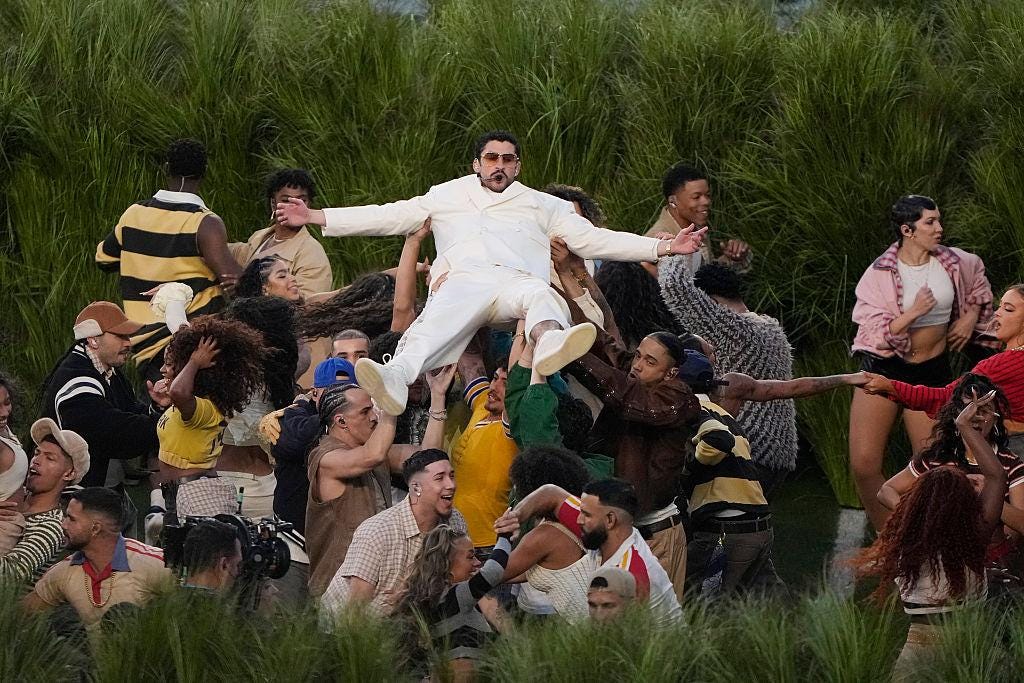
Four years after Bad Bunny’s first Grammy, he would go on to receive one of music’s highest honors, Album of the Year, just days before performing on one of the largest stages in the world: the Super Bowl.
I am not saying that a music career mirrors a liberation movement. The stakes are not the same. The suffering is not the same. The consequences are not the same.
What I am saying is this: both men understood the oldest leadership tool we have.
Story.
Mandela told a story of a South Africa that did not yet exist—and held it steady for 27 years. Bad Bunny tells a story of Puerto Rican pride, of language without apology, of culture that refuses to be flattened for consumption.
When he performed on that Super Bowl stage, I did not understand every word. I did not need to. The imagery, the rhythm, the defiance, the joy—these carried meaning beyond translation. Storytelling is the universal language.
Both leaders returned to their stories again and again. When given a platform, they did not shrink. They did not dilute. They did not abandon the thread. They rewrote, refined, and retold.
As social impact leaders and coaches, this is our work.
We tell stories about futures that do not yet exist. We narrate possibility for coachees who cannot yet see beyond the present constraint. We help them reinterpret their past so it does not imprison their future. We forecast a world that their current evidence cannot confirm.
At Messy Roots, this is why we teach our Narrative Transformational Coaching Approach. Because storytelling provides a clear path in a dense forest. It is how movements form. It is how identity shifts. It is how leaders move communities toward something better.
Tonight, we host our Info Session.
There is still time for leaders and coaches to step into the room. To learn how to wield story with intention. To shape language in a way that liberates rather than confines.
Tell your story like someone who understands its power.
And watch how it changes not only your coaching but the world your coachees believe is possible.